Kim Clijsters retired in 2007, got married, had a baby, and then—two years later—won the US Open. Nobody saw that coming. Not the pundits, not her rivals。maybe not even her. That 2009 run in New York wasn't just a feel-good story;
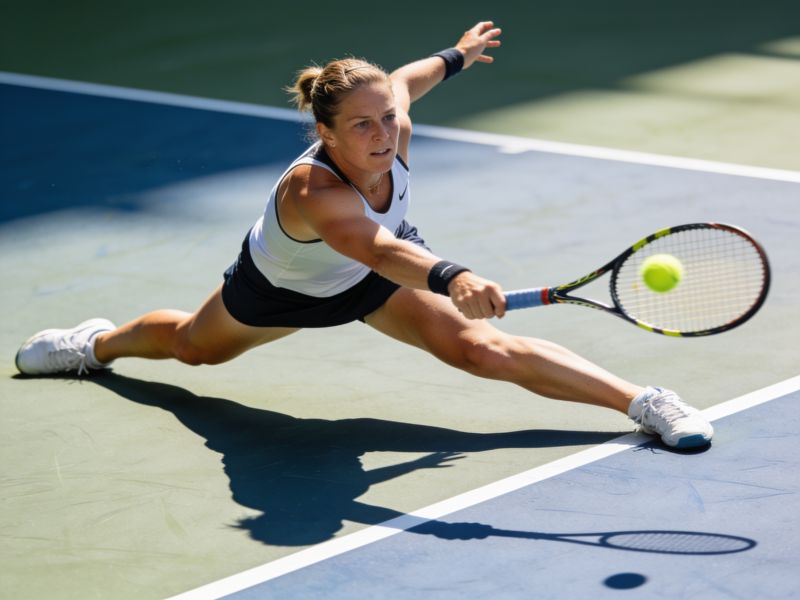
it was a seismic shift in how we think about athletic careers. She beat Venus Williams and Serena Williams back-to-back, then took down Caroline Wozniacki in the final. The whole thing felt surreal, like she'd never left.What made Clijsters different wasn't raw power or a serve that broke speed guns. It was her movement. That split she did—the full splits。actually, on hard courts—became her signature. You'd see her lunging wide to her forehand side, legs splayed, racket flicking a winner. Opponents knew it was coming and still couldn't exploit it. I watched her live at Indian Wells in 2011, and the sound of her shoes squeaking as she pushed off was almost violent. She covered the court like a middle-distance runner, not a tennis player.Her second act had a strange rhythm. She won three more Grand Slams after becoming a mother—the 2009 and 2010 US Opens, plus the 2011 Australian Open. The Australian one was special because she came back from 5-2 down in the third set against Li Na. That match had everything: Li Na's fierce baseline hitting, Clijsters' stubborn defense, and a crowd that didn't know who to cheer for. Clijsters later said she just kept telling herself to move her feet. Simple advice, but it worked. She retired again in 2012。this time for good, with four major singles titles.Here's what gets overlooked: Clijsters was a doubles specialist too. She won two Grand Slam doubles titles with Ai Sugiyama and Meghann Shaughnessy. Doubles sharpened her net game, which is why she could finish points at the service line when singles players usually retreat. That versatility made her a nightmare matchup for big hitters who wanted rhythm. Petra Kvitova, for instance, struggled against Clijsters because Kim gave her nothing to tee off on.Now she's a fixture at exhibitions and a mentor for younger Belgian players. Her academy in Bree, Belgium, churns out juniors who idolize her. She doesn't coach full-time—she's said she prefers the freedom—but her presence matters. When she walks onto a court, even casually。
the atmosphere changes. Players straighten up. Fans pull out phones. Clijsters never chased the spotlight, but it found her anyway. That's the thing about genuine champions: they don't need to announce themselves. Their movement, their choices, their comebacks speak louder than any press conference.